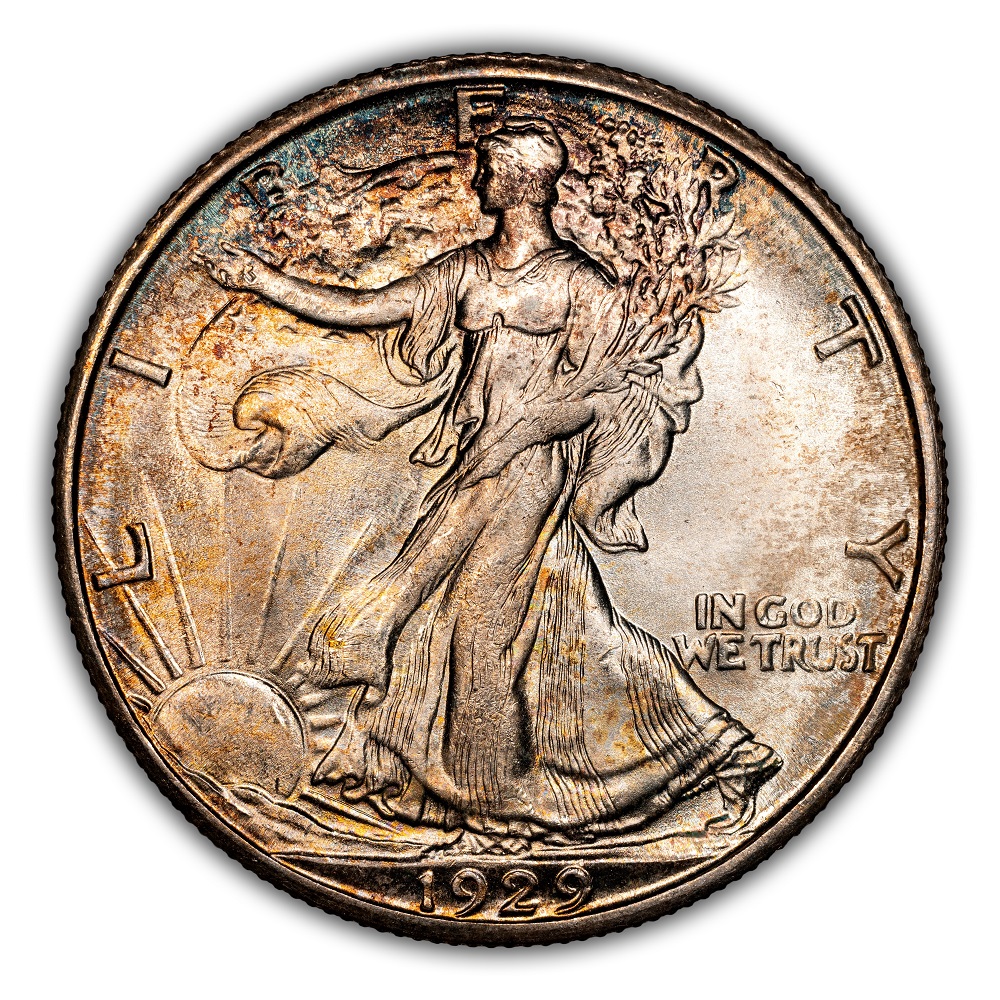
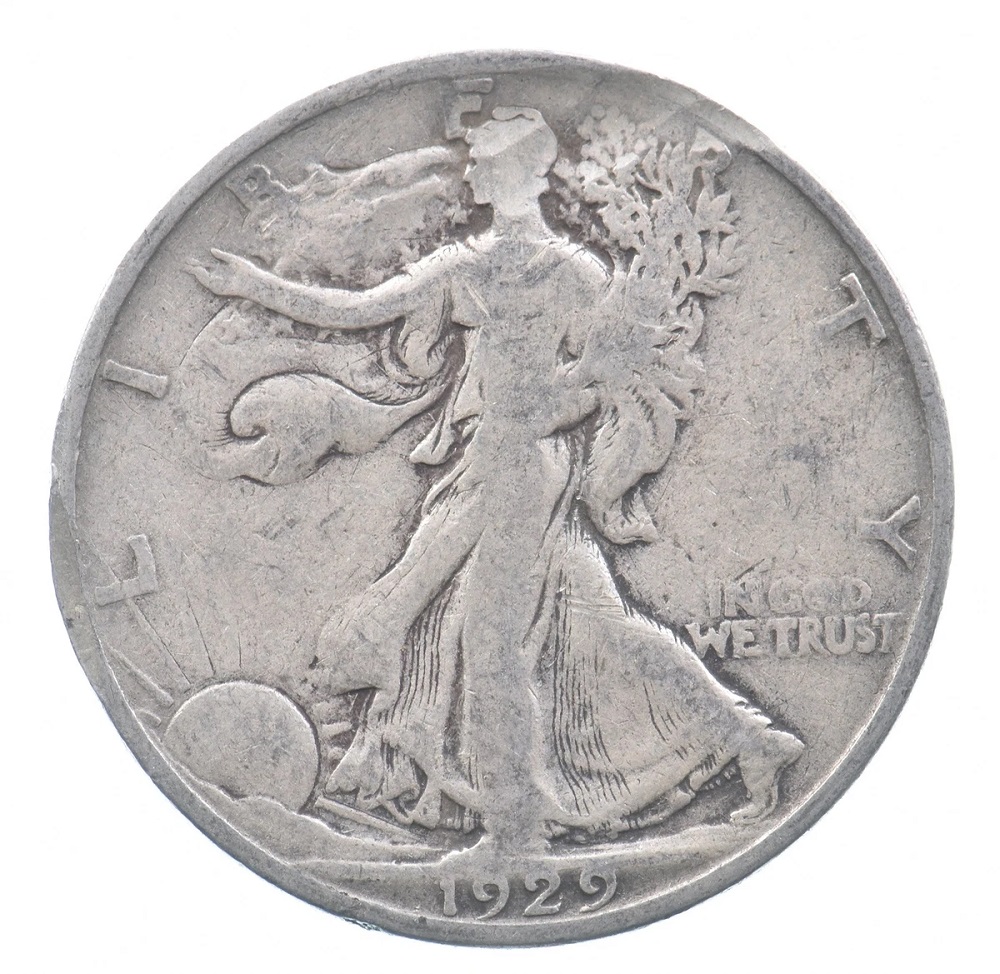
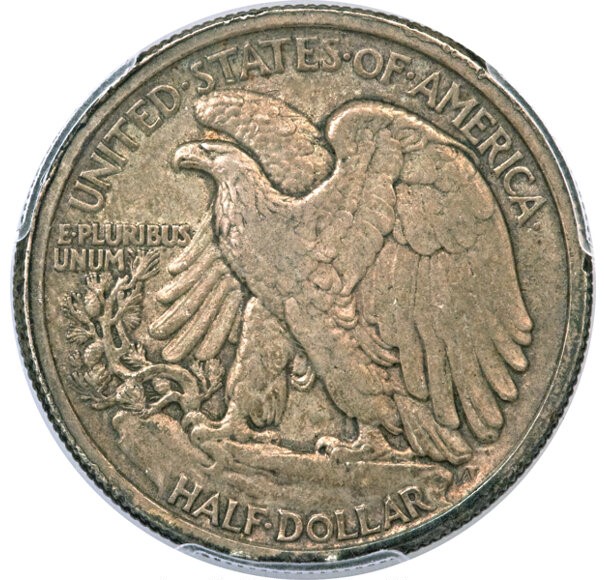
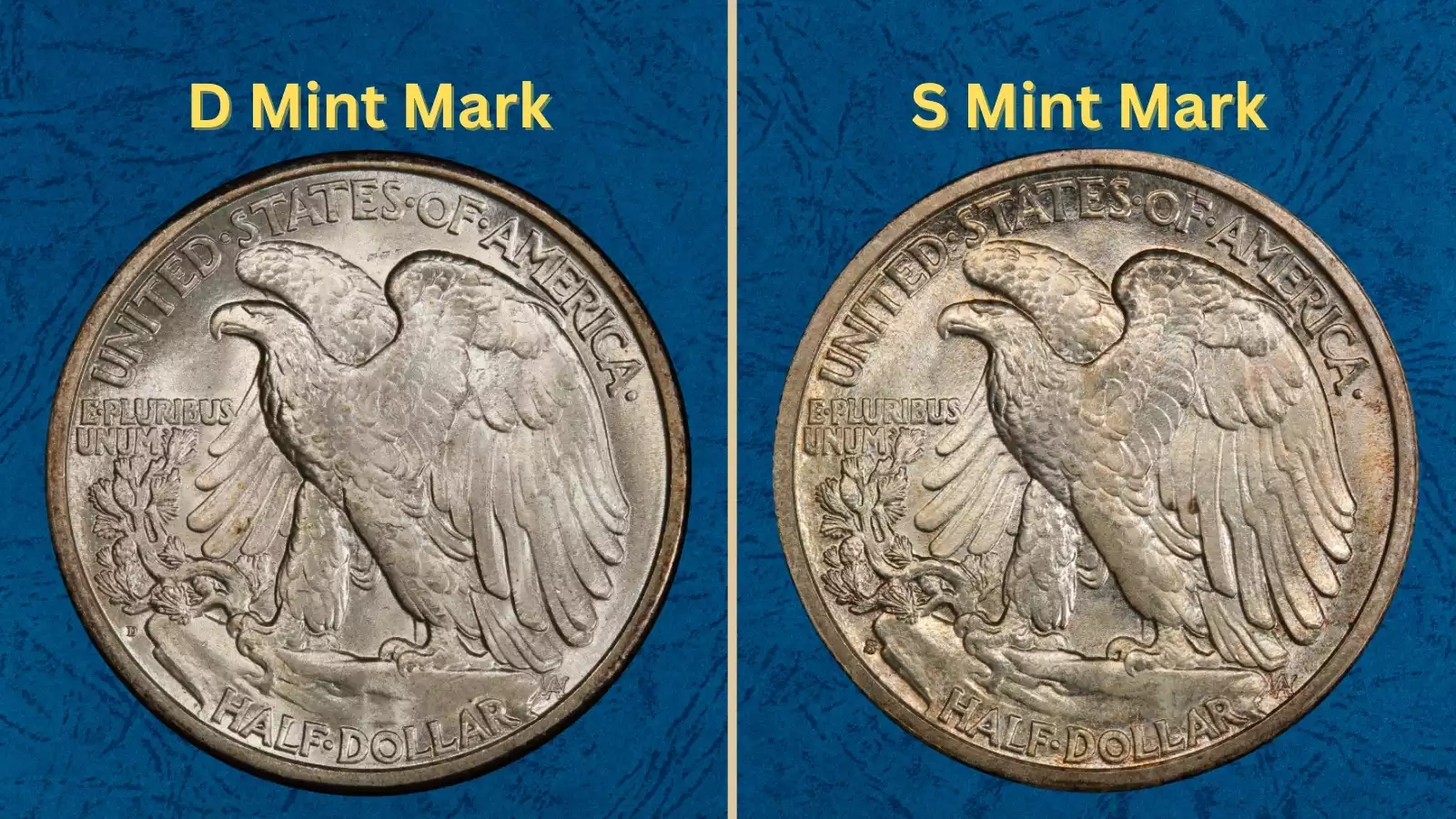
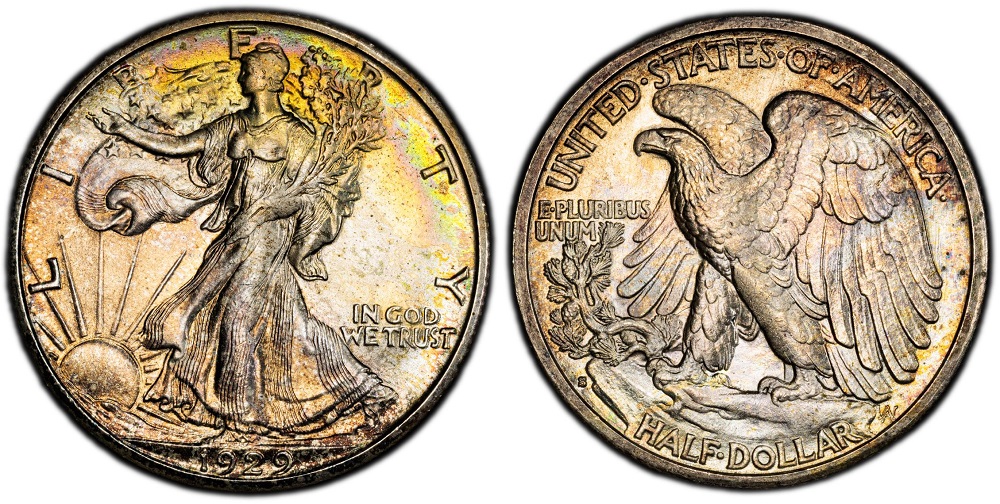
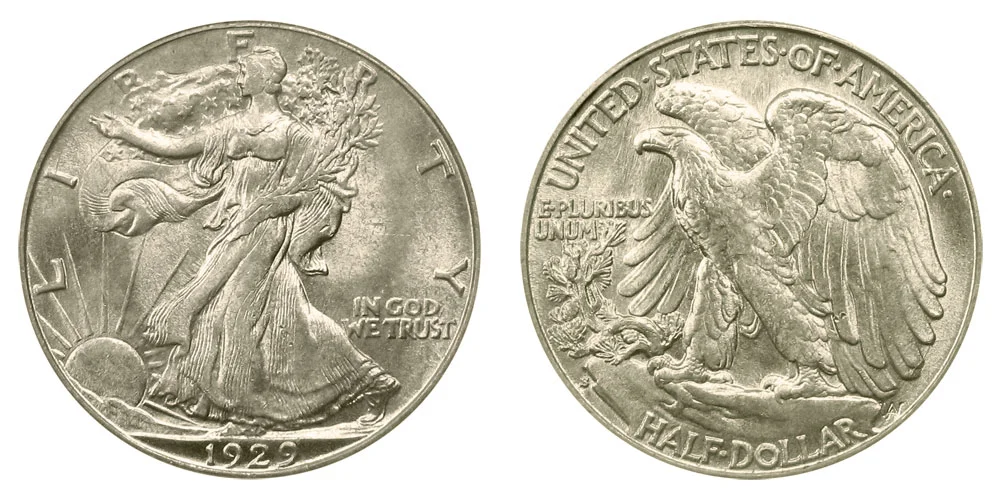
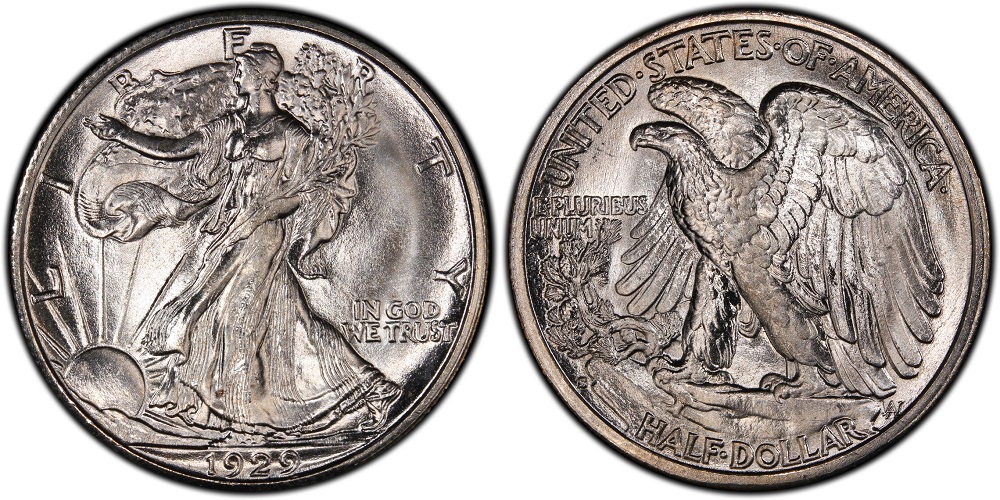
1929 Walking Liberty Half Dollar obverse and reverse showing Liberty striding toward the sun

The 1929 Walking Liberty Half Dollar Value Guide

A 1929-D in PCGS MS67+ CAC sold for $82,250 at Legend Rare Coin Auctions — yet worn examples start around $28. With only 2.9 million coins produced across both mints and no production from 1930 to 1932, the 1929 Walking Liberty is one of the last pre-Depression half dollars and a genuine condition rarity in Gem Mint State.

★★★★★ 4.8 / 5 · Trusted by 1,247 collectors
Check My 1929 Half Dollar Value →
$82,250
Top auction price (1929-D MS67+ PCGS·CAC)
2.9M
Total coins minted across both mints in 1929
4 yrs
Half dollar production gap after 1929 (1930–1932)
0.362 oz
Silver content per coin (90% silver alloy)

1929 Half Dollar Value Calculator

Select your coin's mint mark, condition, and any errors to get an instant value estimate based on real auction data.

Step 1 — Mint Mark

Step 2 — Condition

Step 3 — Errors / Varieties

If you're unsure of your coin's mint mark or grade, a 1929 Half Dollar Coin Value Checker free tool lets you upload a photo for an AI-powered estimate without any numismatic knowledge required.

Is Your 1929-S a Gem Rarity?

The 1929-S Walking Liberty is the rarer of the two 1929 issues in Gem Mint State. The finest known example — graded MS67 by PCGS — realized $71,875 at Heritage Auctions. Use this checklist to see if your coin has the hallmarks of a premium specimen.

Side-by-side comparison of circulated 1929-S Walking Liberty half dollar versus Gem Mint State example showing luster and strike differences

🔲 Common Circulated 1929-S

  • Flat or smooth Liberty hand and arm area
  • Gown lines partially worn flat at center
  • Eagle's breast feathers show smoothing
  • No original mint luster visible
  • Value: $28 – $230 depending on grade
VS

🌟 Gem Mint State 1929-S (MS65+)

  • Full, unbroken luster flowing rim to rim
  • Sharp, complete gown lines with no wear
  • Eagle breast feathers crisp and well-defined
  • Strong strike on Liberty's hand and olive branch
  • Value: $1,500 – $50,000+ depending on grade

Four-Point Gem Check

  • Full luster: Rotate coin slowly under a single light — do bands of luster extend from rim to rim with no breaks across Liberty's arm or gown center?
  • Sharp gown lines: Under 5x magnification, are the individual flowing lines on Liberty's dress sharp and fully defined, without any smoothing or flatness at the high center?
  • Defined eagle feathers: Do the eagle's breast feathers on the reverse show crisp, individual detail rather than a blurred or smooth surface?
  • Clean surfaces: Are bag marks, scratches, and contact marks minimal or very minor — with no deep cuts in the prime focal areas (Liberty's face, the field, the eagle's breast)?

Want a number, not just a yes/no?

Run your coin's details through the free value calculator above for a specific estimate.

Use the Calculator →

📋 Jump to a Section

The Valuable 1929 Half Dollar Errors

No major catalogued die varieties have been officially designated by PCGS or NGC specifically for the 1929 Walking Liberty half dollar. However, genuine mint errors from this low-mintage, pre-Depression issue are extraordinarily rare and command exceptional collector premiums. Any authenticated error on a 1929 Walker carries a significant rarity premium on top of the already-collectible base date. Below are the five error types most likely to surface and what they're worth when genuine.

Off-Center Strike

MOST FAMOUS
$200 – $800+ 1929 Walking Liberty half dollar off-center strike error showing shifted design with blank planchet crescent

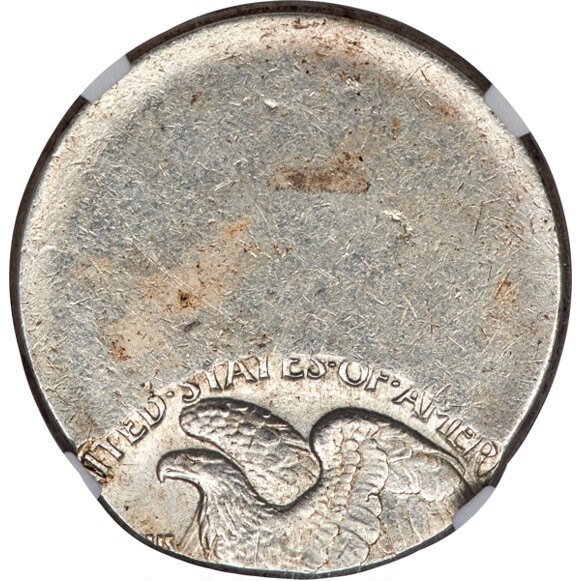
An off-center strike occurs when a planchet slips out of proper position in the collar at the moment of striking, causing the dies to impress the design onto only a portion of the coin's surface. The result is a crescent-shaped blank area where no design was applied. On Walking Liberty half dollars, off-center errors are among the most visually dramatic and immediately recognizable mint mistakes.

To recognize this error, look for a portion of the coin surface that is completely blank — no design, no lettering, no rim. The existing design will appear pushed toward one edge. The degree of off-centering is described as a percentage: a 10% off-center error shows only a thin sliver of blank planchet, while a 50% off-center piece has half the design missing. More dramatic off-centers (25%+) command the strongest premiums.

Collector demand for off-center Walking Liberty halves is strong and consistent, driven by the visual drama of the error and the series' overall popularity. The 1929 date adds a significant premium beyond a common-date off-center. Values range from approximately $200 for a modest 10% off-center in average circulated condition to $800 or more for a dramatic 40–50% off-center example on a higher-grade coin. Authentication by PCGS or NGC is strongly recommended before purchasing.

How to spot it

A crescent-shaped blank area on the planchet surface is visible to the naked eye. Use a straight edge to confirm the design is clearly offset from coin center. The date will be off-center relative to the normal position at the base of the design.

Mint mark

Both D (Denver) and S (San Francisco) issues are possible; neither mint was immune to collar failures.

Notable

Comparable off-center Walking Liberty halves from the 1940s have sold at Heritage Auctions for $200–$600 depending on the degree. A 1929-dated example would carry a meaningful additional premium for the scarce date. Always verify authenticity via PCGS or NGC encapsulation before sale.

Clipped Planchet Error

RAREST
$200 – $600 1929 Walking Liberty half dollar clipped planchet error showing curved missing section at coin edge

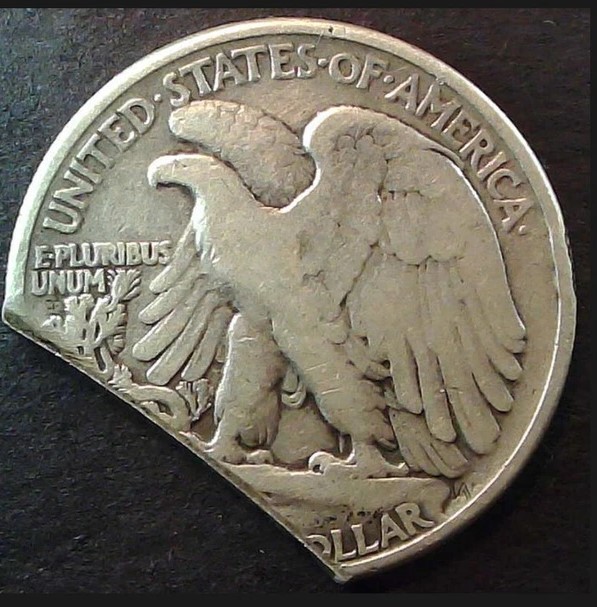
A clipped planchet error occurs during the blanking process at the mint, when the punch that cuts circular blanks from the silver strip overlaps a previously punched hole. The result is a coin missing a curved (or, less commonly, straight) section of its edge. Curved clips are the most common, following the arc of the previous punch hole. This error is entirely a planchet-production defect, created before the blank even enters the coining press.

The diagnostic feature visible to a collector with a 10x loupe is the Blakesley effect: the area of design directly opposite the clip will show weakness or incompleteness, even on otherwise well-struck coins. This weakening occurs because metal does not flow properly toward the clipped edge during striking. A curved indentation at the rim, clearly visible to the naked eye, is the primary identifier — the missing section will have smooth metal edges, not a jagged break.

Clipped planchet errors on 1920s Walking Liberty half dollars are genuinely scarce since relatively few coins survive and fewer still were preserved as collectibles. The rarity of the 1929 date amplifies the premium over a common-date clip error. A well-documented example with clear Blakesley effect and a visible 10–20% clip from any 1929 Walker would realistically achieve $200–$600 at major auction, with larger clips commanding more. PCGS and NGC both encapsulate genuine clip errors and provide an important guarantee of authenticity.

How to spot it

Look for a smooth, curved indentation missing from the coin's edge, with the Blakesley effect (weakness directly opposite the clip) visible under a 10x loupe. The missing section has smooth metal edges rather than a break or crack.

Mint mark

D (Denver) and S (San Francisco) issues both possible; clips originate at the blanking stage before coins reach individual dies.

Notable

Comparable Walking Liberty half dollar clipped planchet errors from the 1940s have sold for approximately $200–$400 at Heritage Auctions. The 1929 date's inherent scarcity would add a meaningful premium. Always confirm the Blakesley effect before purchasing to verify authenticity.

Doubled Die Obverse (DDO)

MOST VALUABLE
$300 – $1,500+ 1929 Walking Liberty half dollar doubled die obverse showing doubling on date numerals and IN GOD WE TRUST motto under magnification

A doubled die obverse (DDO) occurs during the hubbing process at the mint, when the working die receives multiple impressions from the master hub with a slight rotational or linear shift between impressions. The result is a permanent doubling of some or all design elements, visible as shadow images or notching on letters, numerals, and design details. Unlike machine doubling (a worthless die deterioration artifact), genuine DDO varieties are highly desirable and permanent features of specific dies.

On a Walking Liberty half dollar, the primary diagnostic areas for doubled die obverse varieties are the date numerals at the bottom of the obverse, the motto "IN GOD WE TRUST" in the right field, and "LIBERTY" along the top rim. Under 5–10x magnification, genuine doubling appears as sharp, distinct secondary images offset from the primary elements — not as a blurring or smearing, which would indicate the less valuable machine doubling. The date on 1929 issues is particularly diagnostic since both mints used working dies that can, in theory, show hub-doubling artifacts.

No officially catalogued DDO has been formally designated for the 1929 Walking Liberty half dollar by major cataloguing organizations. However, confirmed examples of hub doubling on 1929 Walkers would be significant discoveries, and the series as a whole is known for doubled die varieties across multiple dates. A confirmed, independently authenticated DDO on a 1929 issue would easily command $300–$1,500 or more depending on the degree of doubling and coin grade — and could potentially attract far higher bids if the variety were formally catalogued as a FS-designated variety by CONECA or similar organizations.

How to spot it

Examine date numerals and "IN GOD WE TRUST" under a 10x loupe under raking light. Genuine hub doubling shows crisp, distinct secondary letters offset from the primary. Blurry smearing indicates worthless machine doubling rather than a collectible DDO.

Mint mark

Both D (Denver) and S (San Francisco) issues are theoretically possible; each used different working dies sourced from the same master hub.

Notable

Doubled die varieties are catalogued across the Walking Liberty series by CONECA and the Cherrypickers' Guide. Any confirmed DDO on a 1929 issue should be submitted to PCGS or NGC for authentication and designation, as this would establish it as a new variety and add significant catalogue value.

Broadstrike Error

BEST KEPT SECRET
$150 – $500 1929 Walking Liberty half dollar broadstrike error showing expanded diameter with no collar rim constraint

A broadstrike error occurs when a planchet is struck without the retaining collar that normally constrains the coin's diameter and forms the reeded edge. Without the collar's constraint, the metal spreads outward in all directions during the striking force, producing a coin that is flatter and wider than normal. The design elements spread toward the rim, and the coin lacks the raised rim and reeding of a normal issue. Broadstrikes are most visually obvious compared against a normal coin of the same type.

The diagnostic feature on a broadstrike is the absence of a sharp, raised rim and the complete lack of edge reeding. The coin will measure slightly larger in diameter than the standard 30.6mm specification and will appear flattened or "pancaked" compared to a normal issue. Design details near the periphery — the stars, "LIBERTY," and the rim dentils — may appear spread out or incomplete. The coin will still carry full design detail in the center, but the edge area is clearly abnormal on examination.

Broadstrike errors on pre-1930 Walking Liberty half dollars are genuinely uncommon since surviving examples of any 1929 Walker are relatively few, and broadstrikes were often spent or discarded before reaching collectors. The combination of a 1929-dated coin with a collar-failure error makes for an attractive conversation piece. Broadstrike Walking Liberty halves from more common dates have sold at Heritage Auctions in the $150–$400 range, and the scarce 1929 date would push a genuine example toward the upper end of that range or higher for a premium-condition coin.

How to spot it

Measure the coin's diameter — a broadstrike will exceed the standard 30.6mm specification. Check for complete absence of reeding on the edge and look for the lack of a sharp raised rim. Design details near the periphery will appear spread flat compared to a normal coin.

Mint mark

D (Denver) and S (San Francisco) both possible; collar failures can occur at any press regardless of mint location or date.

Notable

A 1944 Walking Liberty broadstrike was featured in a Heritage Auctions sale demonstrating consistent collector demand for this error type across the series. The 1929 date's inherent scarcity relative to wartime issues adds meaningful premium. Submit to PCGS or NGC for encapsulation before attempting to sell.

Lamination / Planchet Defect

CONDITION RARITY
$100 – $400 1929 Walking Liberty half dollar planchet lamination error showing surface metal separation and delamination on the coin surface

Lamination errors and planchet defects occur when the silver strip used to make coin blanks contains internal impurities, gas pockets, or contaminants from the rolling and annealing process. When the planchet is struck, these weaknesses cause thin layers of the coin's surface metal to separate, crack, or peel away. Delamination errors appear as slash-like lines or peeling surfaces where a thin metal layer has separated from the underlying coin body. These are entirely production-stage defects and are not caused by post-mint damage.

The key diagnostic under a 10x loupe is a metallic flap or separation line in the coin's surface that follows no design element — it will cross over lettering, devices, and fields indiscriminately, unlike a scratch or gouge that would show directionality. A lamination crack shows as a thin, raised, jagged line in the coin's surface. A peeling lamination may show a triangular or irregular flap of metal partially lifted from the surface. The metal under the separation will appear with a different texture than the coin's main surface.

Planchet defect errors on 1920s silver coinage are collected by error specialists who appreciate the historical context of pre-Federal Reserve metal processing. The 1929 Walking Liberty half dollar, struck during the last year of half dollar production before the Great Depression, represents a particularly appealing canvas for any planchet error. Examples with dramatic, clearly visible laminations command premiums over subtler surface defects. Values range from approximately $100 for a minor lamination crack to $400 or more for a dramatic peeling lamination covering a significant portion of the coin's surface.
How to spot it

Under a 10x loupe, look for thin metallic flaps partially separated from the coin's surface, or jagged slash-like crack lines that cross design elements at random angles. The separated area will have a different surface texture than the surrounding coin body.

Mint mark

D (Denver) and S (San Francisco) both possible; planchet defects originate in the silver strip before blanking, independent of which mint struck the coin.

Notable

Comparable Walking Liberty half dollar lamination errors from the 1940s have achieved $100–$300 at auction. The 1929-dated coin's inherent value as a scarce pre-Depression issue makes any authenticated planchet error more desirable to both error collectors and series collectors simultaneously, broadening the potential buyer pool.

1929 Half Dollar Mintage & Survival Data

Historical photograph of the Denver Mint facility in the 1920s, which struck 1,001,200 Walking Liberty half dollars in 1929
Mint Mint Mark Mintage MS Population (PCGS+NGC) Top Grade Known
Denver D 1,001,200 ~1,802 grading events (as of 2024) MS67+ (PCGS, 2 known)
San Francisco S 1,902,000 ~532 MS grading events (NGC) MS67 (PCGS)
Total 1929 2,903,200 No Philadelphia Mint half dollars struck in 1929
Composition Specs: 90% silver, 10% copper · Weight: 12.5 grams · Diameter: 30.6mm · Edge: Reeded · Designer: Adolph A. Weinman · Silver content: 0.36169 troy oz per coin · Series: Walking Liberty Half Dollar (1916–1947).

The combined 1929 mintage of under 3 million is one of the lowest in the Walking Liberty series — only the 1921 issues, 1916 issues, and the 1938-D are scarcer in absolute terms. Of the coins minted, a very small fraction survives in Mint State today. Half dollar production ceased entirely after 1929 and did not resume until 1933, making these the last Walking Liberty halves struck before the Great Depression and a significant historical crossroads in American numismatics.

Found out your coin's mint and grade?

Head back to the calculator and enter those details for a precise value estimate.

Calculate My Value →

Describe Your Coin for a Detailed Assessment

Describe what you see on your coin — the mint mark location, the condition of Liberty's gown, any unusual features — and we'll analyze it instantly.

Mention these things if you can

  • Mint mark (D or S) and its location
  • Condition of Liberty's hand and arm
  • Sharpness of gown lines on Liberty's dress
  • Eagle's breast feather detail on reverse
  • Presence or absence of original luster

Also helpful

  • Any unusual markings, doubling, or shifts
  • Edge condition — reeded or unusual?
  • Toning color (gray, golden, iridescent)
  • Any visible test cuts or graffiti
  • Whether the coin is in a holder

1929 Half Dollar Value Chart at a Glance

Values below are based on recent auction results and established price guides. For a full step-by-step 1929 half dollar identification walkthrough and detailed grade-by-grade breakdown, see this complete 1929 Walking Liberty half dollar reference guide. Values shown are approximate retail for problem-free coins; cleaned or damaged coins sell for significantly less.

Variety Worn (G–VG) Circulated (F–XF) Uncirculated (MS60–64) Gem (MS65+)
1929-D (Denver) $28 – $43 $50 – $230 $730 – $2,400 $2,400 – $82,250
⭐ 1929-S (San Francisco) GEM RARITY $28 – $46 $50 – $270 $780 – $2,760 $2,760 – $71,875
🔴 1929-D Off-Center Strike $200+ $250 – $500 $500 – $800+ Rare — consult specialist
1929 Clipped Planchet $150+ $200 – $400 $400 – $600 Rare — consult specialist
1929 DDO (if confirmed) $300+ $400 – $800 $800 – $1,500+ Discovery coin — specialist evaluation needed

🪙 CoinKnow gives you an instant value estimate from your phone camera — point and shoot at your 1929 half dollar for a quick on-the-go identification and price lookup — a coin identifier and value app.

How to Grade Your 1929 Walking Liberty Half Dollar

Grading strip showing four 1929 Walking Liberty half dollar specimens from Good condition to Gem Uncirculated, illustrating condition progression

Worn (Good G-4 to VG-8)

$28 – $46

Liberty's design is visible but significantly flat. Gown lines are mostly worn smooth. The date and mint mark are readable. "IN GOD WE TRUST" is legible but weak. The coin is worth primarily its silver content plus a modest collector premium for the scarce date.

Circulated (Fine F-12 to XF-45)

$50 – $270

Gown lines are partially to nearly fully visible. Liberty's arm shows obvious wear but the design elements are clear. In XF, only the highest points are flat. The eagle's breast feathers show wear but remain distinct. These grades represent the most common surviving 1929 Walkers.

Uncirculated (MS60–64)

$730 – $2,760

Full original mint luster present with no wear anywhere. Surface marks (bag marks, contact marks) are present but tolerable. The coin has never circulated but shows the typical abrasions from contact with other coins in mint bags. Value jumps substantially at each grade point in this range.

Gem (MS65 and above)

$2,400 – $82,250+

Exceptional luster, sharp strike, and minimal surface marks. Only the finest-quality Mint State survivors reach this tier. MS66+ and MS67 examples are extreme condition rarities for 1929 Walkers. The finest known 1929-D (MS67+ PCGS·CAC) realized $82,250, confirming the potential of top-grade survivors.

Pro Tip — Strike vs. Wear: Many 1929 Walking Liberty half dollars were struck with insufficient pressure, particularly at Liberty's left hand and the olive branch on the obverse, and at the eagle's breast on the reverse. This strike weakness can look like wear to a beginner. The key distinction: strike weakness is accompanied by full, flowing mint luster across the weak area, while actual wear shows luster breaking or dulling at the flat spot. Learning this distinction is essential before submitting coins for professional grading — misidentifying a weak-strike uncirculated coin as circulated will significantly undervalue your coin.

📱 CoinKnow lets you compare your 1929 half dollar against a database of graded examples to help match the condition and confirm your grade estimate before sending to a professional grading service — a coin identifier and value app.

Where to Sell Your Valuable 1929 Half Dollar

The right venue depends on your coin's grade. Worn circulated coins are easy to sell anywhere; high-grade Mint State examples deserve major auction exposure to reach the most competitive bidders.

🏛️ Heritage Auctions

The largest numismatic auction house in the world. Best for MS63 and above examples, where competitive bidding between advanced collectors and registry set builders maximizes realized prices. Heritage's Walker specialists provide accurate attribution. The 1929-S MS67 ($71,875) and multiple MS66+ examples have sold through Heritage. Minimum consignment values typically apply for direct auction entry.

📦 eBay

The broadest audience for circulated and lower Mint State examples. Browse recently sold prices for 1929-D Walking Liberty half dollars to calibrate your listing price. Use "Sold Listings" filter to see real completed transaction data. PCGS or NGC certified coins consistently sell for 20–40% more than equivalent raw coins on eBay due to buyer confidence.

🏪 Local Coin Shop

Fast, convenient, and no listing fees. Dealers typically offer 50–70% of retail for circulated coins and 60–80% for certified Mint State examples. Ideal for worn to Fine examples where shipping and auction fees would eat into thin margins. Call ahead with the coin's grade and condition — a reputable dealer will give a rough estimate by phone before you make the trip.

💬 Reddit / Coin Forums

r/Coins4Sale and r/CoinSales allow peer-to-peer transactions. Best for mid-range coins (VF to MS63) where you want retail price but prefer a direct sale over auction fees. The Walking Liberty series has an active collector community willing to pay fair prices. Always use PayPal Goods & Services for buyer and seller protection. Include clear photos and, if certified, the slab number.

💡 Get It Graded First — For Coins MS62 and Above

If your 1929 Walking Liberty half dollar shows full luster and minimal wear, professional grading by PCGS or NGC is strongly recommended before selling. Certification costs approximately $35–$50 per coin and typically adds far more than that to the sale price for any coin MS63 or better. The 1929-D population at PCGS shows strong demand at every Mint State grade tier — a certified MS65 example will consistently outperform an equivalent raw coin by several hundred dollars.

1929 Half Dollar FAQ

How much is a 1929 half dollar worth?
A 1929 Walking Liberty half dollar in heavily worn Good condition is worth approximately $28–$37. In Very Fine condition, expect $45–$65. Uncirculated examples start around $730–$780, and Gem MS65 specimens can reach $2,000–$5,000 or more. The finest known 1929-D in PCGS MS67+ CAC sold for $82,250, while the top 1929-S in MS67 realized $71,875 at Heritage Auctions.
What mint marks were used on 1929 half dollars?
Only two mints produced half dollars in 1929: the Denver Mint (D mint mark) struck 1,001,200 coins, and the San Francisco Mint (S mint mark) produced 1,902,000 coins. There was no Philadelphia Mint production of half dollars in 1929. The mint mark appears on the reverse of the coin, at the lower left near the pine branch.
Which 1929 half dollar is rarer — the D or the S?
The 1929-D is rarer by mintage, with only 1,001,200 struck versus 1,902,000 for the 1929-S. In Mint State, the 1929-S is generally considered scarcer in Gem condition and above, making top-grade examples extremely difficult to find. The 1929-D tops out at MS67+ (two known at PCGS), while the finest 1929-S reaches MS67. Both are major condition rarities above MS65.
Where is the mint mark on a 1929 half dollar?
The mint mark on all 1929 Walking Liberty half dollars is located on the reverse (eagle side), at the lower left, just above and to the right of the pine branch. Look for a small 'D' for Denver or a small 'S' for San Francisco. The mint mark is approximately 1–2mm tall and may show some wear on circulated coins, requiring a loupe for clear identification.
What are the most valuable 1929 half dollar errors?
No major catalogued varieties exist specifically for 1929 Walking Liberty half dollars, but genuine mint errors are highly collectible. Off-center strikes (10–50% off-center) can fetch $200–$800 or more. Clipped planchet errors are worth $200–$600. Doubled die obverse or reverse varieties, if confirmed, would command significant premiums. Wrong planchet errors would be exceptional rarities worth thousands. Always have potential errors authenticated by PCGS or NGC.
What is the silver content of a 1929 half dollar?
The 1929 Walking Liberty half dollar contains 0.36169 troy ounces of pure silver. The coin is composed of 90% silver and 10% copper, weighing 12.5 grams with a diameter of 30.6mm. At any silver price above approximately $1.38 per troy ounce, the coin is worth more than face value for its metal content alone. The current silver melt value is approximately $12–$28 depending on prevailing silver prices.
How do I grade a 1929 Walking Liberty half dollar?
Focus on three key areas: Liberty's right hand and outstretched arm (first to show wear), the gown lines on her flowing dress (circulated coins show smoothing here), and the eagle's breast feathers on the reverse. An uncirculated coin retains full original mint luster with no flat spots. Note that many 1929 Walkers were weakly struck at Liberty's hand — this is a strike issue, not wear, and must not be confused during grading.
Should I clean my 1929 half dollar?
Never clean a 1929 Walking Liberty half dollar. Cleaning — even with mild soap and water — removes the original mint luster and creates microscopic hairline scratches visible under magnification. A cleaned coin is graded 'details' by PCGS and NGC and sells for 30–60% less than an original-surface example of the same grade. The original toning, even if dark or uneven, is part of the coin's authenticity and value. Store in a non-PVC coin holder instead.
What happened to half dollar production after 1929?
Half dollar production stopped entirely after 1929, with no coins struck in 1930, 1931, or 1932. The Great Depression, which began with the stock market crash in late 1929, severely reduced demand for high-denomination coinage. Production resumed in 1933 with the San Francisco Mint striking only 1,786,000 coins. This gap in production makes the 1929 issues the final pre-Depression Walking Liberty half dollars and adds to their historical significance.
Who designed the Walking Liberty half dollar?
The Walking Liberty half dollar was designed by Adolph A. Weinman, a German-born American sculptor. The obverse depicts Liberty striding toward the rising sun, draped in the American flag. The reverse shows a majestic bald eagle perched on a mountain. Weinman's design debuted in 1916 and ran through 1947. It is widely regarded as one of the most beautiful coin designs in U.S. numismatic history, and the obverse image was later adapted for the American Silver Eagle bullion coin.

Ready to find out what your coin's worth?

Use the free calculator — select your mint mark, condition, and any errors for an instant estimate.

Calculate My 1929 Half Dollar Value →